






Benefits of Creatine monohydrate
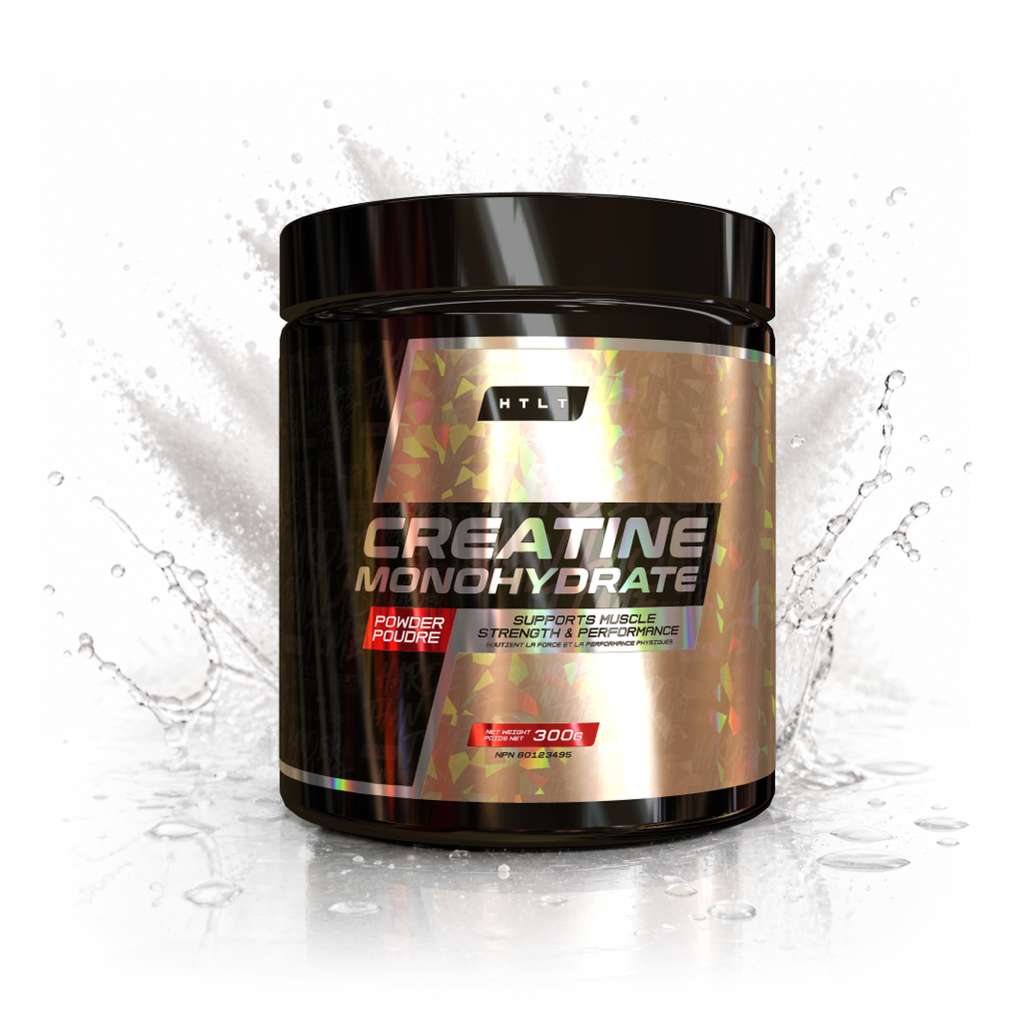
Creatine Monohydrate is one of the most effective sports nutrition supplements around and has a strong reputation to increase lean mass and improve explosive exercise performance. HTLT creatine monohydrate has 60, 5g servings per bottle.

Take 1 scoop of HTLT creatine monohydrate daily to replace what your body uses every day. Creatine can be used at any time of day.
Creatine Monohydrate
Creatine Monohydrate is one of the most researched and proven sports nutrition ingredients for strength, power, muscle growth, and high-intensity performance. It works by increasing the body’s intramuscular creatine and phosphocreatine stores, which helps rapidly regenerate ATP, the body’s immediate energy currency during heavy lifts, sprints, explosive movements, and repeated bouts of intense training.
What Creatine Monohydrate Does
Creatine helps your muscles produce energy faster during short, intense efforts. When you train hard, ATP gets used up quickly; creatine helps recycle ADP back into ATP, allowing you to push harder, perform more reps, recover between sets more efficiently, and maintain output during repeated high-intensity work.
In simple terms: creatine does not “stimulate” you — it helps your muscles store and use more quick-access energy.
Why Creatine Monohydrate Specifically?
Creatine Monohydrate is the gold standard form of creatine because it has the most research behind it, is effective at saturating muscle creatine stores, is cost-effective, and has a strong safety profile in healthy individuals when used appropriately. ISSN describes creatine monohydrate as one of the most effective ergogenic supplements available for increasing high-intensity exercise capacity and lean body mass during training.
Many “advanced” creatine forms exist, but none have consistently outperformed creatine monohydrate in real-world effectiveness, research support, or value.
- Kreider RB, Kalman DS, Antonio J, et al. International Society of Sports Nutrition position stand: safety and efficacy of creatine supplementation in exercise, sport, and medicine. Journal of the International Society of Sports Nutrition. 2017;14:18.
- Buford TW, Kreider RB, Stout JR, et al. International Society of Sports Nutrition position stand: creatine supplementation and exercise. Journal of the International Society of Sports Nutrition. 2007;4:6.
- Chilibeck PD, Kaviani M, Candow DG, Zello GA. Effect of creatine supplementation during resistance training on lean tissue mass and muscular strength in older adults: a meta-analysis. Open Access Journal of Sports Medicine. 2017;8:213–226.
- Avgerinos KI, Spyrou N, Bougioukas KI, Kapogiannis D. Effects of creatine supplementation on cognitive function of healthy individuals: a systematic review of randomized controlled trials. Experimental Gerontology. 2018;108:166–173.
- Xu C, Cao L, Yang J, et al. The effects of creatine supplementation on cognitive function in adults: a systematic review and meta-analysis. Frontiers in Nutrition. 2024.
- Gu J, et al. Creatine supplementation in young men under resistance training: a systematic review and meta-analysis. Frontiers in Nutrition. 2026.
Key Benefits
Creatine Monohydrate helps support increases in strength, power, and explosive performance by improving the body’s ability to rapidly produce ATP during heavy or high-intensity exercise. This makes it especially useful for weightlifting, sprinting, jumping, football, hockey, combat sports, and any training style built around short bursts of maximum effort.
Creatine can support greater gains in lean mass when combined with resistance training. It helps increase training volume and performance over time, while also drawing water into muscle cells, which may support a fuller muscle look and create a more favorable environment for muscle growth.
Performance positioning:
Supports size, fullness, lean muscle gains, and better adaptation to consistent weight training.
Creatine may help support post-exercise recovery and training adaptation by improving energy availability, reducing performance drop-off, and helping the body better tolerate repeated intense exercise. The International Society of Sports Nutrition notes that creatine supplementation may support post-exercise recovery and other exercise-related outcomes.
Performance positioning:
Supports recovery between hard sets, hard sessions, and high-frequency training blocks.
Creatine pulls water into muscle tissue, which can increase intracellular hydration and create a fuller, more pumped look. This is not the same as “bad bloating” for most users; it is largely water stored inside the muscle, which is one reason creatine is often associated with improved muscle fullness.
Performance positioning:
Promotes fuller-looking muscles, better cellular hydration, and a more performance-ready muscle environment.
Creatine is also being studied for its role in brain energy metabolism because the brain uses ATP just like muscle tissue does. While the strongest evidence is still in exercise performance, creatine may support cognitive performance under conditions where energy demand is high, such as fatigue, sleep restriction, or mental stress.


